MyBatis 初始化流程
基本流程:
-
使用
XMLConfigBuilder解析MyBatis主配置文件 -
使用
XMLMapperBuilder解析mapper.xml配置文件-
SQL方法保存在Configuration.mappedStatements
-
-
使用
MapperRegistry注册mapper接口,为每个mapper接口生成一个MapperProxy代理对象 -
最终执行代理类中的代理方法
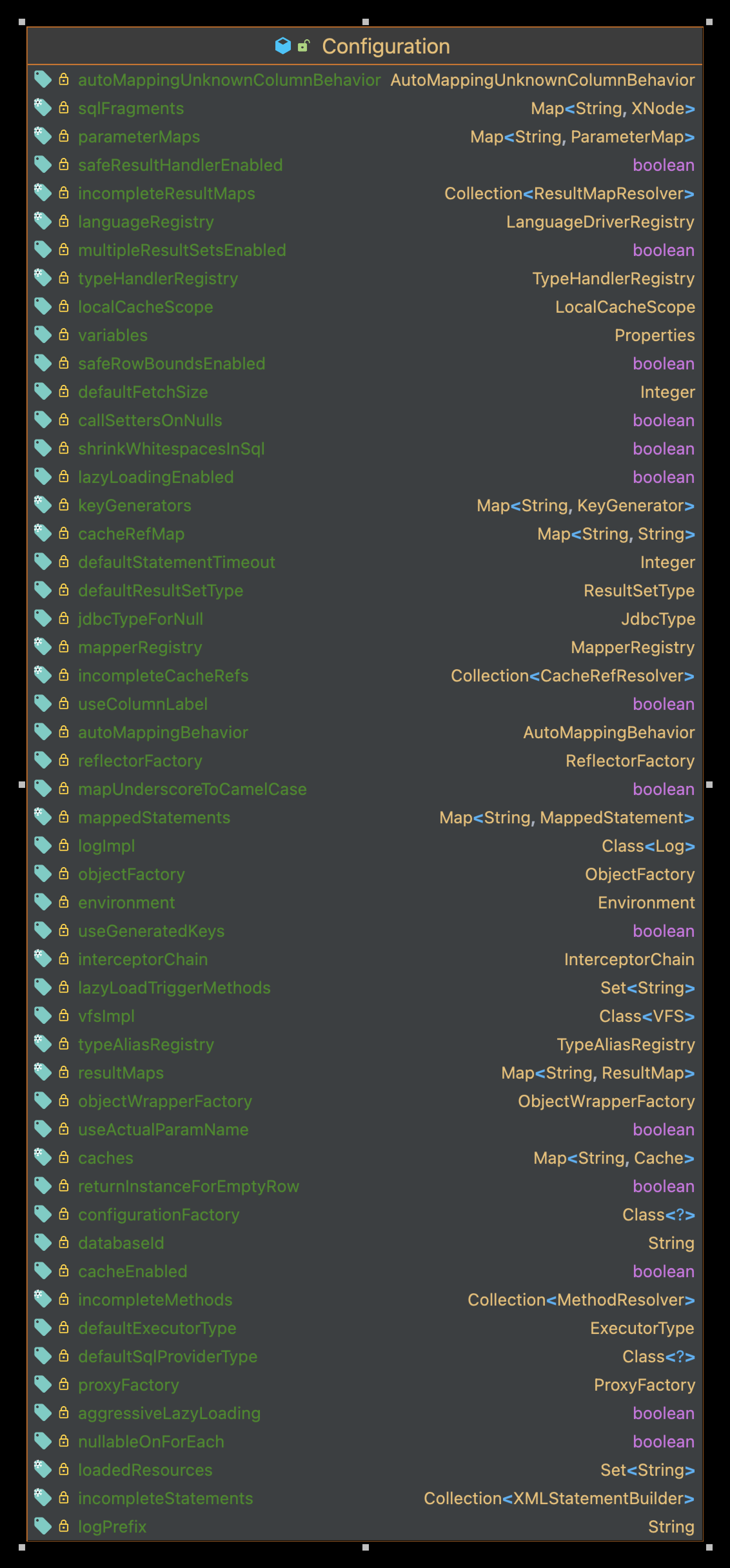
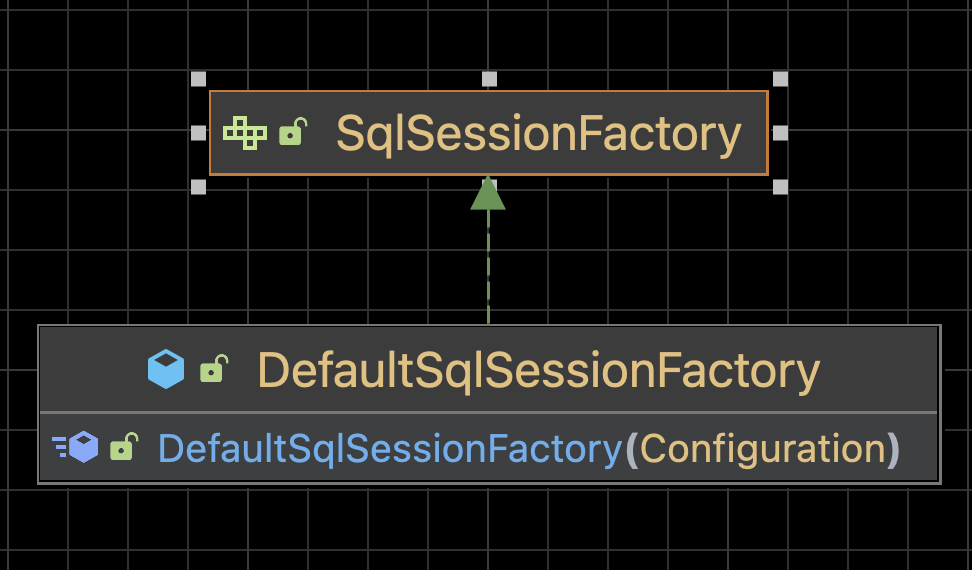
核心类:
| Configuration | SqlSessionFactory |
|---|---|
|
|
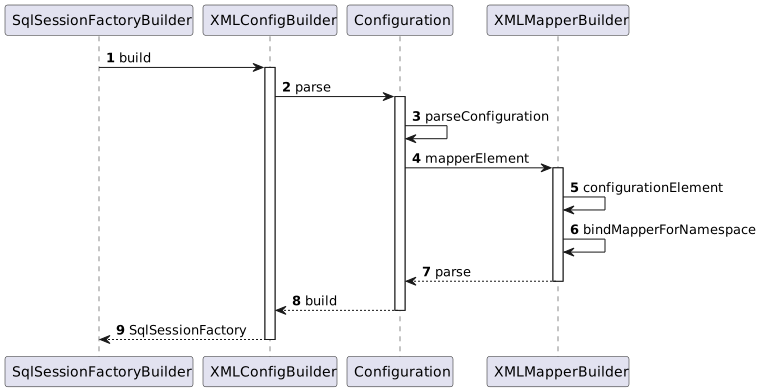
创建 SqlSessionFactory
public SqlSessionFactory build(InputStream inputStream, String environment, Properties properties) {
    try {
        // 创建 XMLConfigBuilder 和创建 Configuration
        XMLConfigBuilder parser = new XMLConfigBuilder(inputStream, environment, properties);
        // 解析 MyBatis-config.xml,并返回 DefaultSqlSessionFactory
        return build(parser.parse());
    } catch (Exception e) {
        throw ExceptionFactory.wrapException("Error building SqlSession.", e);
    } finally {
        ErrorContext.instance().reset();
        try {
            inputStream.close();
        } catch (IOException e) {
            // Intentionally ignore. Prefer previous error.
        }
    }
}public SqlSessionFactory build(Configuration config) {
return new DefaultSqlSessionFactory(config);
}解析 MyBatis-config.xml
对应的解析类 org.apache.ibatis.builder.xml.XMLConfigBuilder,入口在 build 方法。
public Configuration parse() {
    if (parsed) {
        throw new BuilderException("Each XMLConfigBuilder can only be used once.");
    }
    parsed = true;
    // 解析 mybatis-config.xml 到 Configuration
    parseConfiguration(parser.evalNode("/configuration"));
    return configuration;
}private void parseConfiguration(XNode root) {
try {
propertiesElement(root.evalNode("properties"));
Properties settings = settingsAsProperties(root.evalNode("settings"));
loadCustomVfs(settings);
loadCustomLogImpl(settings);
typeAliasesElement(root.evalNode("typeAliases"));
pluginElement(root.evalNode("plugins"));
objectFactoryElement(root.evalNode("objectFactory"));
objectWrapperFactoryElement(root.evalNode("objectWrapperFactory"));
reflectorFactoryElement(root.evalNode("reflectorFactory"));
settingsElement(settings);
environmentsElement(root.evalNode("environments"));
databaseIdProviderElement(root.evalNode("databaseIdProvider"));
typeHandlerElement(root.evalNode("typeHandlers"));
// 使用 XMLMapperBuilder 解析 mapper
mapperElement(root.evalNode("mappers"));
} catch (Exception e) {
throw new BuilderException("Error parsing SQL Mapper Configuration. Cause: " + e, e);
}
}解析 mapper.xml
对应的解析类 org.apache.ibatis.builder.xml.XMLMapperBuilder,入口在 mapperElement 方法。
解析 <mapper> 标签
private void mapperElement(XNode parent) throws Exception {
    if (parent != null) {
        for (XNode child : parent.getChildren()) {
            // package
            if ("package".equals(child.getName())) {
                String mapperPackage = child.getStringAttribute("name");
                configuration.addMappers(mapperPackage); (1)
            } else {
                String resource = child.getStringAttribute("resource");
                String url = child.getStringAttribute("url");
                String mapperClass = child.getStringAttribute("class");
                // resource
                if (resource != null && url == null && mapperClass == null) {
                    ErrorContext.instance().resource(resource);
                    try (InputStream inputStream = Resources.getResourceAsStream(resource)) {
                        XMLMapperBuilder mapperParser = new XMLMapperBuilder(inputStream, configuration, resource
                            , configuration.getSqlFragments());
                        mapperParser.parse(); (2)
                    }
                }
                // url
                else if (resource == null && url != null && mapperClass == null) {
                    ErrorContext.instance().resource(url);
                    try (InputStream inputStream = Resources.getUrlAsStream(url)) {
                        XMLMapperBuilder mapperParser = new XMLMapperBuilder(inputStream, configuration, url,
                            configuration.getSqlFragments());
                        mapperParser.parse(); (2)
                    }
                }
                // class
                else if (resource == null && url == null && mapperClass != null) {
                    Class<?> mapperInterface = Resources.classForName(mapperClass);
                    configuration.addMapper(mapperInterface); (1)
                } else {
                    throw new BuilderException("A mapper element may only specify a url, resource or class, but " +
                        "not more than one.");
                }
            }
        }
    }
}| 1 | 使用 Configuration#addMapper 解析 mapper, |
| 2 | 使用 XMLMapperBuilder#parse 解析 mapper,底层用的同样是 Configuration#addMapper |
public void parse() {
    // 判断是否包含在未解析资源中
    if (!configuration.isResourceLoaded(resource)) {
        // 解析 mapper 的子标签,失败的存入 incompleteXXX
        configurationElement(parser.evalNode("/mapper"));
        // 标记为已解析
        configuration.addLoadedResource(resource);
        // 注册 mapper 接口
        bindMapperForNamespace();
    }

    // 重新解析 失败的结果集
    parsePendingResultMaps();
    // 重新解析 失败的缓存ref
    parsePendingCacheRefs();
    // 重新解析 失败的 SQL 语句
    parsePendingStatements();
}
解析 <mapper> 的子标签
在 configurationElement 方法中,当遇到 <select> <insert> <update> <delete> 时,会调用 XMLMapperBuilder 解析 SQL 语句
private void configurationElement(XNode context) {
    try {
        String namespace = context.getStringAttribute("namespace");
        if (namespace == null || namespace.isEmpty()) {
            throw new BuilderException("Mapper's namespace cannot be empty");
        }
        // 设置 namespace,解析 mapper 接口用
        builderAssistant.setCurrentNamespace(namespace);
        // 解析 二级缓存引用
        cacheRefElement(context.evalNode("cache-ref"));
        // 解析 二级缓存
        cacheElement(context.evalNode("cache"));
        // 参数映射  -> Configuration#parameterMaps
        parameterMapElement(context.evalNodes("/mapper/parameterMap"));
        // 结果映射  -> org.apache.ibatis.session.Configuration.resultMaps
        resultMapElements(context.evalNodes("/mapper/resultMap"));
        // 解析共用 SQL 片段
        sqlElement(context.evalNodes("/mapper/sql"));
        // 解析 SQL 语句,使用 XMLStatementBuilder
        buildStatementFromContext(context.evalNodes("select|insert|update|delete")); (1)
    } catch (Exception e) {
        throw new BuilderException("Error parsing Mapper XML. The XML location is '" + resource + "'. Cause: " + e, e);
    }
}| 1 | 解析完毕会添加到 Configuration 的 mappedStatements 中 |
注册 mapper 接口
private void bindMapperForNamespace() {
    String namespace = builderAssistant.getCurrentNamespace();
    if (namespace != null) {
        Class<?> boundType = null;
        try {
            boundType = Resources.classForName(namespace); (1)
        } catch (ClassNotFoundException e) {
            // ignore, bound type is not required
        }
        if (boundType != null && !configuration.hasMapper(boundType)) {
            // 标记已加载
            configuration.addLoadedResource("namespace:" + namespace);
            configuration.addMapper(boundType); (2)
        }
    }
}| 1 | 加载 xml 中 namespace 对应的 class |
| 2 | 使用 Configuration#addMapper 注册 mapper |
public <T> void addMapper(Class<T> type) {
    mapperRegistry.addMapper(type);
}public <T> void addMapper(Class<T> type) {
// 只添加接口
if (type.isInterface()) {
// 已添加过抛出异常
if (hasMapper(type)) {
throw new BindingException("Type " + type + " is already known to the MapperRegistry.");
}
boolean loadCompleted = false;
try {
// 保存代理工厂到 knowMapper
knownMappers.put(type, new MapperProxyFactory<>(type)); (1)
// 解析接口中的注解和 xml 文件
MapperAnnotationBuilder parser = new MapperAnnotationBuilder(config, type); (2)
parser.parse();
loadCompleted = true;
} finally {
// 如果添加失败,则删除
if (!loadCompleted) {
knownMappers.remove(type);
}
}
}
}| 1 | 在这里 mapper 接口被替换成了 MapperProxyFactory |
| 2 | 注解的 SQL 最终会生成 ProviderSqlSource 对象 |
解析 SQL
在 XMLMapperBuilder#configurationElement 方法的最后,调用 buildStatementFromContext 方法解析 SQL。
private void buildStatementFromContext(List<XNode> list) {
    if (configuration.getDatabaseId() != null) {
        buildStatementFromContext(list, configuration.getDatabaseId());
    }
    buildStatementFromContext(list, null);
}private void buildStatementFromContext(List<XNode> list, String requiredDatabaseId) {
// 每个 SQL 语句对应一个 MappedStatement
for (XNode context : list) {
final XMLStatementBuilder statementParser =
new XMLStatementBuilder(configuration, builderAssistant, context, requiredDatabaseId);
try {
// 解析 SQL 并添加到 Configuration
statementParser.parseStatementNode();
} catch (IncompleteElementException e) {
configuration.addIncompleteStatement(statementParser);
}
}
}具体的解析在 XMLStatementBuilder#parseStatementNode 方法中。
public void parseStatementNode() {
    // key
    String id = context.getStringAttribute("id");
    String databaseId = context.getStringAttribute("databaseId");

    // 根据 databaseId 判断是否加载 SQL 标签
    if (!databaseIdMatchesCurrent(id, databaseId, this.requiredDatabaseId)) {
        return;
    }

    // nodeName : select insert update delete
    String nodeName = context.getNode().getNodeName();
    // SQL 类型
    SqlCommandType sqlCommandType = SqlCommandType.valueOf(nodeName.toUpperCase(Locale.ENGLISH));

    boolean isSelect = sqlCommandType == SqlCommandType.SELECT;
    // 是否刷新缓存,如果配置了 flushCache 使用 flushCache,如果没有配置,select 语句为 false,非 select 语句为 true
    boolean flushCache = context.getBooleanAttribute("flushCache", !isSelect);
    // 是否使用二级缓存,如果配置了 useCache 使用 useCache,如果滑配置,select 语句为 true
    boolean useCache = context.getBooleanAttribute("useCache", isSelect);
    boolean resultOrdered = context.getBooleanAttribute("resultOrdered", false);

    // 解析 SQL 片段
    // Include Fragments before parsing
    XMLIncludeTransformer includeParser = new XMLIncludeTransformer(configuration, builderAssistant);
    includeParser.applyIncludes(context.getNode());

    String parameterType = context.getStringAttribute("parameterType");
    Class<?> parameterTypeClass = resolveClass(parameterType);

    String lang = context.getStringAttribute("lang");
    // 在 new Configuration() 时设置,默认值为 XMLLanguageDriver
    LanguageDriver langDriver = getLanguageDriver(lang);

    // 解析 selectKey
    // Parse selectKey after includes and remove them.
    processSelectKeyNodes(id, parameterTypeClass, langDriver);

    // (仅限INSERT和UPDATE)这将告诉MyBatis使用JDBC getGeneratedKeys 方法来检索由数据库内部生成的键(例如,MySQL或SQL Server等RDBMS中的自动增量字段)。默认:
    // false 。
    // Parse the SQL (pre: <selectKey> and <include> were parsed and removed)
    KeyGenerator keyGenerator;
    String keyStatementId = id + SelectKeyGenerator.SELECT_KEY_SUFFIX;
    keyStatementId = builderAssistant.applyCurrentNamespace(keyStatementId, true);
    if (configuration.hasKeyGenerator(keyStatementId)) {
        keyGenerator = configuration.getKeyGenerator(keyStatementId);
    } else {
        keyGenerator = context.getBooleanAttribute("useGeneratedKeys",
            configuration.isUseGeneratedKeys() && SqlCommandType.INSERT.equals(sqlCommandType))
            ? Jdbc3KeyGenerator.INSTANCE : NoKeyGenerator.INSTANCE;
    }

    // SQL 解析
    SqlSource sqlSource = langDriver.createSqlSource(configuration, context, parameterTypeClass); (1)
    StatementType statementType = StatementType.valueOf(context.getStringAttribute("statementType",
        StatementType.PREPARED.toString()));

    // 解析标签属性,提供给 MapperBuilderAssistant 使用
    Integer fetchSize = context.getIntAttribute("fetchSize");
    Integer timeout = context.getIntAttribute("timeout");
    String parameterMap = context.getStringAttribute("parameterMap");
    String resultType = context.getStringAttribute("resultType");
    Class<?> resultTypeClass = resolveClass(resultType);
    String resultMap = context.getStringAttribute("resultMap");
    String resultSetType = context.getStringAttribute("resultSetType");
    ResultSetType resultSetTypeEnum = resolveResultSetType(resultSetType);
    if (resultSetTypeEnum == null) {
        resultSetTypeEnum = configuration.getDefaultResultSetType();
    }
    String keyProperty = context.getStringAttribute("keyProperty");
    String keyColumn = context.getStringAttribute("keyColumn");
    String resultSets = context.getStringAttribute("resultSets");

    // 向 Configuration 添加 MappedStatement 对象
    builderAssistant.addMappedStatement(id, sqlSource, statementType, sqlCommandType,
        fetchSize, timeout, parameterMap, parameterTypeClass, resultMap, resultTypeClass,
        resultSetTypeEnum, flushCache, useCache, resultOrdered,
        keyGenerator, keyProperty, keyColumn, databaseId, langDriver, resultSets); (2)
}| 1 | 最终得到 SqlSource 对象 |
| 2 | 为每条 SQL 标签创建一个 MappedStatement 对象,保存在 Configuration 中。 |
解析过程
基于 SqlNode 接口的组合模式,SqlNode 接口提供了非常多的实现类(如下图),其中很多实现类都对应一个动态 SQL 标签(叶子节点),其中 MixedSqlNode 实现类是作为非叶子节点,实现管理子节点的相关方法。

SqlNode 继承关系图对应的解析类 org.apache.ibatis.builder.xml.XMLScriptBuilder 入口在 mapperElement 方法。
创建 XMLScriptBuilder
public SqlSource createSqlSource(Configuration configuration, XNode script, Class<?> parameterType) {
    XMLScriptBuilder builder = new XMLScriptBuilder(configuration, script, parameterType);
    return builder.parseScriptNode();
}public XMLScriptBuilder(Configuration configuration, XNode context, Class<?> parameterType) {
super(configuration);
this.context = context;
this.parameterType = parameterType;
initNodeHandlerMap(); (1)
}| 1 | initNodeHandlerMap 方法初始化了全部的动态 SQL 标签解析器
|
解析 SQL 标签
public SqlSource parseScriptNode() {
    MixedSqlNode rootSqlNode = parseDynamicTags(context); (1)
    SqlSource sqlSource;
    // 存在未解析的 ${} 或者存在动态标签则为动态 SQL
    if (isDynamic) {
        // 动态SQL
        sqlSource = new DynamicSqlSource(configuration, rootSqlNode); (2)
    } else {
        // 原生SQL(不需要处理的SQL)
        sqlSource = new RawSqlSource(configuration, rootSqlNode, parameterType); (3)
    }
    // 最终得到的是 StaticSqlSource 对象
    return sqlSource; (2)
}| 1 | 解析动态 SQL 标签,并判断是否是动态 SQL 并修改 isDynamic |
| 2 | DynamicSqlSource 中运行时 解析 #{} 和 ${} |
| 3 | RawSqlSource 中会在创建时使用 SqlSourceBuilder 解析 #{},替换成 ? |
解析过程
protected MixedSqlNode parseDynamicTags(XNode node) {
    List<SqlNode> contents = new ArrayList<>();
    NodeList children = node.getNode().getChildNodes();
    // 遍历所有子节点
    for (int i = 0; i < children.getLength(); i++) {
        XNode child = node.newXNode(children.item(i));
        if (child.getNode().getNodeType() == Node.CDATA_SECTION_NODE || child.getNode().getNodeType() == Node.TEXT_NODE) {
            // mapper.xml 中的 SQL 语句
            String data = child.getStringBody("");
            TextSqlNode textSqlNode = new TextSqlNode(data);
            // 命中 ${}
            if (textSqlNode.isDynamic()) {
                contents.add(textSqlNode);
                isDynamic = true;
            } else {
                contents.add(new StaticTextSqlNode(data));
            }
        }
        // 命中动态标签
        else if (child.getNode().getNodeType() == Node.ELEMENT_NODE) {
            String nodeName = child.getNode().getNodeName();
            NodeHandler handler = nodeHandlerMap.get(nodeName);
            if (handler == null) {
                throw new BuilderException("Unknown element <" + nodeName + "> in SQL statement.");
            }
            handler.handleNode(child, contents);
            isDynamic = true;
        }
    }
    return new MixedSqlNode(contents); (1)
}| 1 | 得到组合模式中的非叶子节点 |
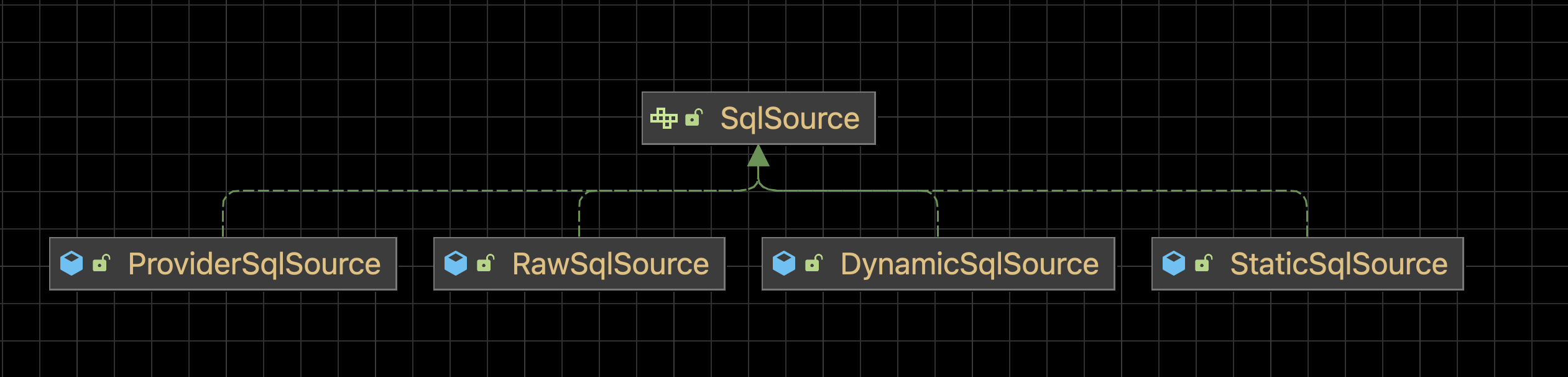
SqlSource
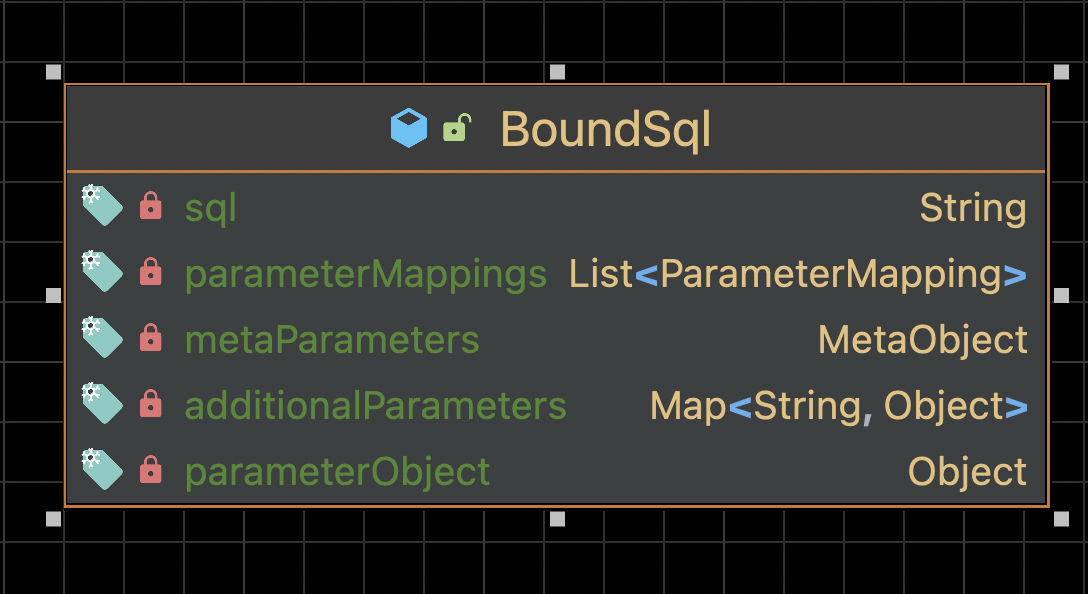
SqlSource 中只有一个方法 getBoundSql ,控制着动态 SQL 语句解析的整个流程,此方法会返回数据库可以执行的 SQL。
public interface SqlSource {

  BoundSql getBoundSql(Object parameterObject);

}
DynamicSqlSource
public BoundSql getBoundSql(Object parameterObject) {
    DynamicContext context = new DynamicContext(configuration, parameterObject);
    rootSqlNode.apply(context);
    SqlSourceBuilder sqlSourceParser = new SqlSourceBuilder(configuration);
    Class<?> parameterType = parameterObject == null ? Object.class : parameterObject.getClass();
    // 解析 #{}
    SqlSource sqlSource = sqlSourceParser.parse(context.getSql(), parameterType, context.getBindings());
    // 解析 ${}
    BoundSql boundSql = sqlSource.getBoundSql(parameterObject);
    context.getBindings().forEach(boundSql::setAdditionalParameter);
    return boundSql;
}